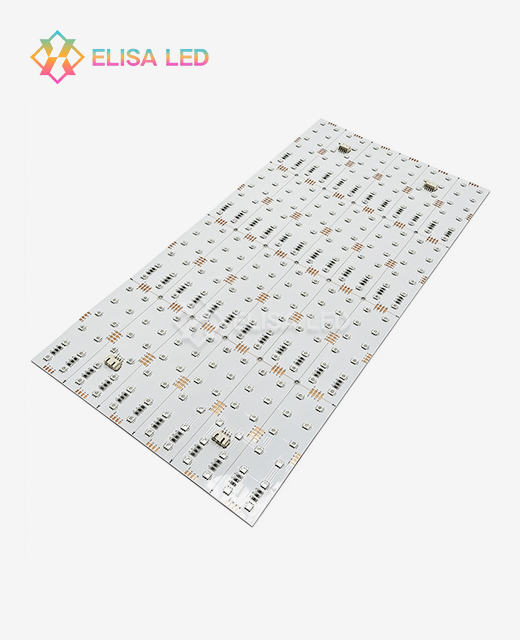
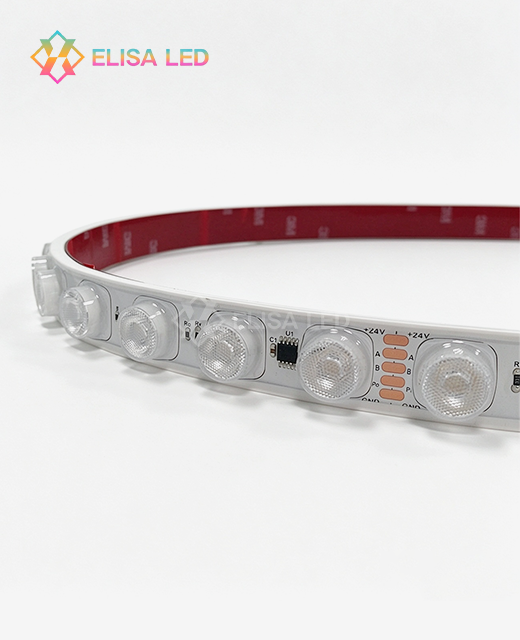
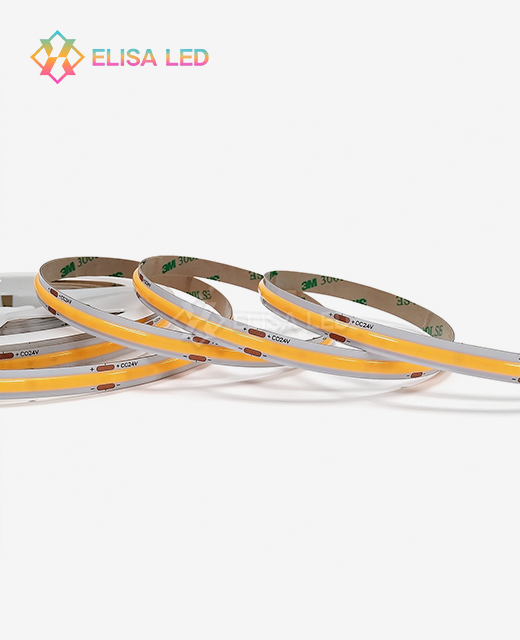
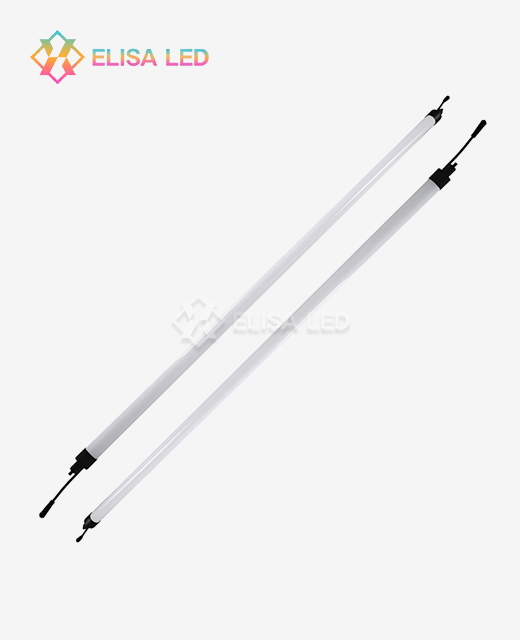
A non-pixel LED strip is a linear light source where LEDs run as one continuous circuit instead of individually controlled points. For cove lighting, that continuous circuit produces the smooth glow architects and retail buyers want, with no dark gaps or chasing effects. This guide covers voltage, density, color, IP rating, and supplier checks so your next order — whether it's 500 meters or 50,000 meters — lands on spec the first time.
A "non-pixel LED strip" is a bendable circuit board that has LEDs on it that work together through shared power lines instead of being accessible as separate points. This word refers to the architecture of the controls, not the brightness or quality of the build. As long as the whole strip (or a clear zone) turns on, off, or changes color as a single unit, it doesn't matter if it's single-color, dual-color-temperature, or even RGB.
The word "non-pixel" tells you how the strip is controlled, not how bright it is or how well it's put together. Some buyers think "non-pixel" means "basic," which is a mistake that means they don't set the right standards for a cove for a retail main store.
There are cut points every 2–10 cm on the strip, which is made up of LEDs that are lined up in parallel groups along copper traces. Each section gets current controlled by a resistor and a steady voltage (12V or 24V). This keeps the brightness the same across all cut lengths. The whole strip reacts to a PWM signal, a 0-10V signal, or an analog voltage drop from the driver to dim the lights. That action of a single circuit is what makes cove lighting look like a single line of light instead of a string of dots.
When buying things for building projects, people sometimes mix up addressable pixel tape and non-pixel LED strip. This is a mistake that costs a lot of money because it leads to the wrong controls, data cables, and final results.
| Criterion | Non-pixel LED strip | Pixel / addressable strip |
|---|---|---|
| Control | Whole strip or zone together | Individual LED or pixel groups |
| Effect | Smooth, uniform glow | Chasing, animation, video mapping |
| Wiring | Power + optional dimmer wire | Power + data signal line |
| Cove suitability | Strong — ideal for ambient light | Rare — mainly for feature walls |
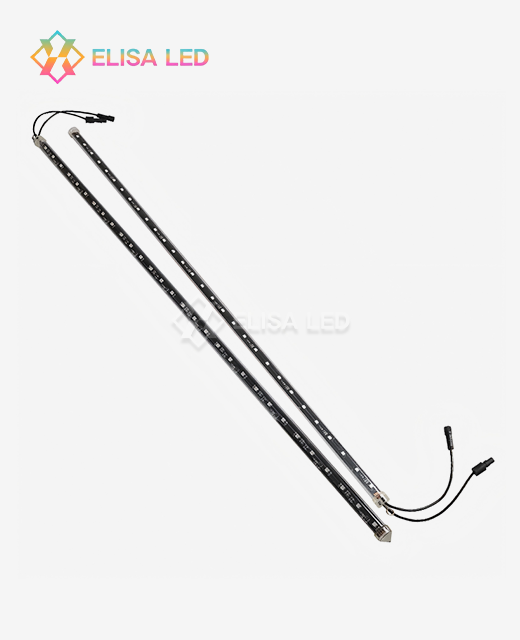
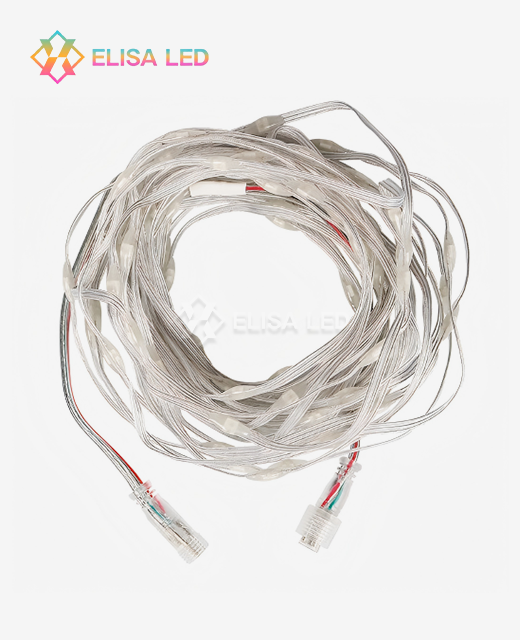
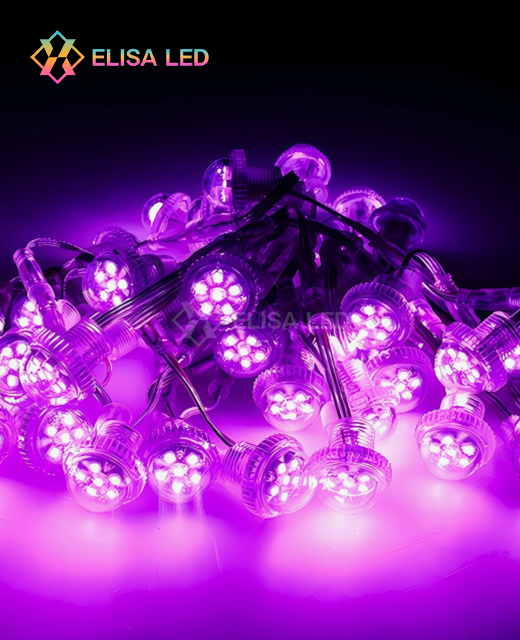
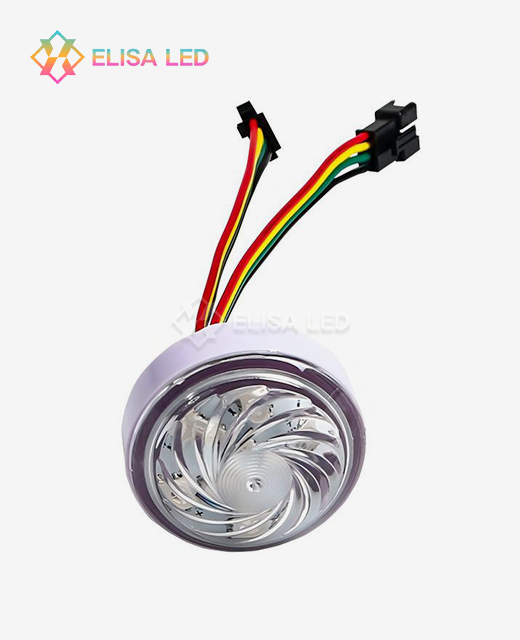
| Typical products | Standard 12V/24V tape, COB tape | 26mm LED Pixel light, 45mm LED Pixel light, D40 LED Pixel Tube |
Control ICs like WS2811 or DMX512 are used to drive each point separately in products like the 26mm LED Pixel light or D40 LED Pixel Tube. This is great for media facades but too much and more likely to break for a quiet cove above a reception desk.
Choose a "non-pixel LED strip" if you want even background lighting, backlighting for signs, or a glow that's built into furniture and easy to change colors. You should only use pixel or addressable tape for projects that need synchronized animation, video effects, or individually mapped color points. In these cases, it's more like using entertainment lighting than cove architecture.
Set these prices down in writing before you ask for a quote:
A lot of datasheets list lumens that were measured at the LED box level, not at the strip level after diffusion losses. Get in touch with the factory and ask if this number has been checked on the final reel. Also, check to see if the power number is nominal or recorded under load. In cheap strips, the difference between the two can be 10–15%. A trustworthy non-pixel LED strip supplier will give you test conditions when you ask for them, not just a marketing number.
Individual diodes are placed at set distances on SMD strips. This means that lower-density SMD tape (60 LEDs/m or less) can show dots when looked at closely or when it reflects off of a shiny ceiling. COB (chip-on-board) strips cover a densely packed phosphor line with a continuous line, making a smoother line that doesn't have any gaps. Either way, the strip is still a non-pixel LED strip — the LEDs share a circuit and switch as one zone, so density affects dot visibility, not control architecture. For dot-free coves that are very important, I usually suggest starting at 120 LEDs/m or higher and testing the sample in a profile mock-up before placing an order for a lot of them.
Density doesn't guaranty a result without dots on its own. It depends on how far the strip is from the opening of the viewable cove, how deep the metal channel is, and whether a frosted diffuser is placed on top of the strip. If you put a strip three centimeters from a shiny white ceiling, it will still show dots even though it looks great on a bench. Before putting in the specs for a full production run, you should always test the strip inside the real shape and at the real viewing angle.
2700K to 3000K is a warm and cozy range of colors for lobbies and living areas. Most retail and business coves are set to 3500K to 4000K for a balanced, energetic look. In general, CRI 80+ is fine for business use. But for a cabinet showing jewelry, food, or fabric, you need CRI 90+ with documented R9 performance, because low R9 values make reds look dull in "good" lighting.
| Factor | 12V | 24V | 48V |
|---|---|---|---|
| Best for | Short runs under 5m, tight furniture cavities | Standard commercial cove runs | Long architectural runs, high-power jobs |
| Voltage drop | Higher over distance | Lower, more forgiving | Lowest current draw |
| Cut interval | Shorter, more flexible | Slightly longer segments | Longest segments |
| Environment | Typical rating |
|---|---|
| Dry indoor ceiling cove | IP20, protected from contact |
| Humid indoor space (bathroom, spa) | IP44 to IP65 |
| Outdoor covered cove | IP65 or higher |
| Direct wash-down or wet exposure | IP67/IP68, full potting |
| Rating for the |
A lot of the time, cut ends and connecting spots are missed during installation. This lowers the run's IP rating without anyone noticing. The manufacturer's IP test results usually follow the IEC 60529 method (IEC, 2013), so make sure you know if the rating only applies to the bare non-pixel LED strip or to the whole sealed assembly with end caps.
Once you have the paper number for power per meter, it's easy to do the math:
"Total strip power" equals "watts per meter × length installed."
Suggested power source size = total strip power × 1.2 to 1.3
A 20-meter run at 14.4 W/m uses a strip load of 288W. Adding the 20–30% safety range gives you a 350–375W supply, which is more than enough to account for changes in the room temperature and the fact that drivers age over time.
A reliable non-pixel LED strip supplier does quality control on their own for LED binning, PCB assembly, and final testing, instead of hiring someone else to do it. Ask for LM-80 lumen maintenance data (IES, 2015) and TM-21 lifetime projections (IES, 2011). These reports show not only how bright the LEDs are on the first day, but also how they age when they are used. Batch tracking, which means connecting a finished reel to its LED lot and PCB run, is most important when a customer reports a color difference six months after the installation.
When people buy under their own brands, the real test is to see if a factory can handle neutral packaging, custom SKU coding, and small test runs of 500 to 1,000 meters without raising the price per meter. Elisa LED was started in 2025 by Elisa, who worked in the lighting business and had been making LEDs since 2016 under the brand name Xuanan Lighting. The OEM/ODM process was designed to fill this vacancy. Every unique batch goes through aging tests, waterproof tests, and photometric checks. It comes with a 2–5 year guarantee and can be sent to more than 50 countries.
There are five things you need to think about when choosing a "non-pixel LED strip" for cove lighting: voltage, color quality, IP rating, and supplier reliability. If you set the setback distance and spacing correctly, the dots will go away. If you set the power correctly, long runs will stay bright all the way through. Before the first large order ships, make sure that the CRI matches the application, that the IP rating matches the real world, and that you can trust the test data that your provider has given you. Approve every new spec with a real mock-up, not just a paper. This one step finds most problems before they get to the store shelf or the client's roof.
A non-pixel LED strip is a linear LED product where sections of LEDs operate together instead of being individually controlled. It's the standard choice for continuous ambient, cove, and signage lighting.
A non-pixel LED strip controls a whole zone at once. An addressable strip, like a 45mm LED Pixel light or D40 LED Pixel Tube, controls each LED separately and supports chasing or video effects.
24V works better for most commercial coves because it lowers voltage drop over longer runs. 12V still suits short furniture-embedded lengths or compact spaces.
Use a non-pixel LED strip with 120 LEDs/m or higher, add setback distance from the visible opening, and test the sample inside the actual aluminum profile before ordering in bulk.
Dry indoor coves usually need only IP20. Humid or outdoor coves need IP44 to IP65, and hazardous industrial settings require specialty products like an Explosion-Proof LED strip rated for ATEX compliance.
Multiply watts per meter by installed length, then add 20–30% margin. A 288W calculated load typically needs a 350–375W power supply for safe long-term operation.
Sourcing delays and color-match rejects cost real margin during peak renovation season. Elisa LED supplies non-pixel LED strip products in 12V, 24V, and 48V, with private-label packaging and 7–10 day production for standard SKUs. Reach our team at inquiry@elisaled.com with your voltage, CCT, and length requirements, and we'll return a quote with stock status the same day.
1. International Electrotechnical Commission. IEC 60529 (2013) — Degrees of protection provided by enclosures (IP Code). Referenced in the IP rating selection section.
2. Illuminating Engineering Society. IES LM-80-15 (2015) — Measuring lumen maintenance of LED light sources. Referenced in the supplier evaluation section.
3. Illuminating Engineering Society. IES TM-21-11 (2011) — Projecting long-term lumen maintenance of LED light sources. Referenced in the supplier evaluation section.
4. European Commission. RoHS Directive 2011/65/EU — Restriction of hazardous substances in electrical and electronic equipment.
5. European Commission. REACH Regulation (EC) No. 1907/2006 — Chemical substance registration, evaluation, authorisation, and restriction.
6. U.S. Department of Energy. Solid-State Lighting Program — LED performance, testing, and application resources.
About the Author
Daniel Carter is a Senior LED Lighting Solutions Engineer with over a decade of experience specifying LED systems for commercial and architectural projects across North America, Europe, and Southeast Asia. He has worked directly with distributors, cabinet manufacturers, and private-label brands on voltage selection, photometric testing, and supplier quality audits, and writes to help B2B buyers avoid costly specification mistakes before production runs ship.