Product Classification Overview
Product Display
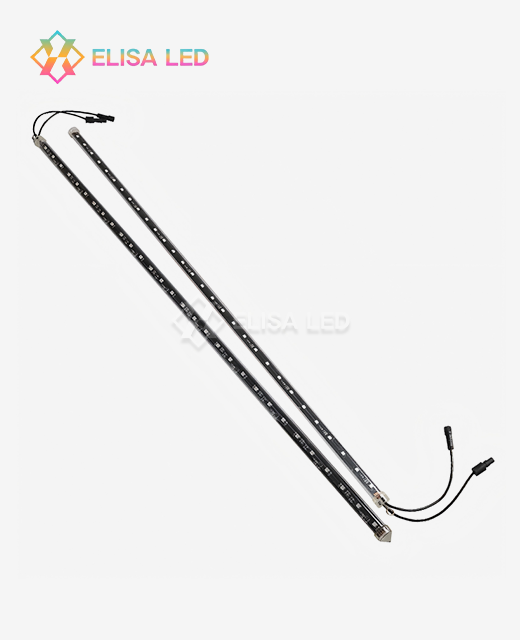
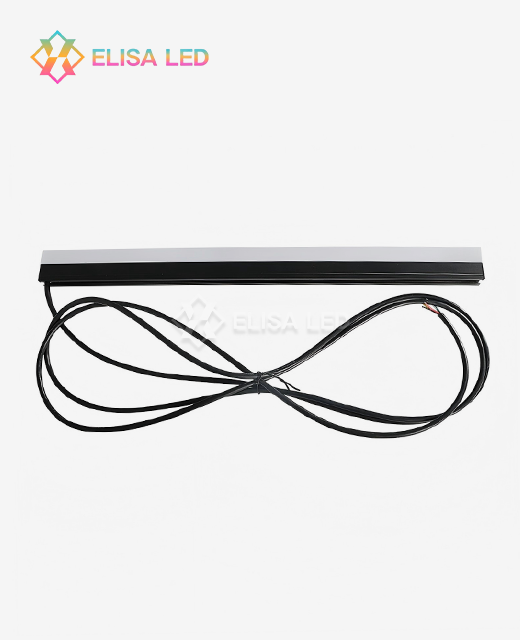
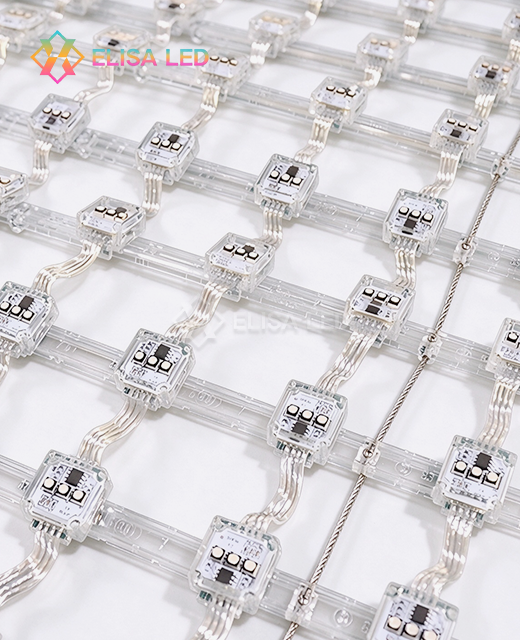
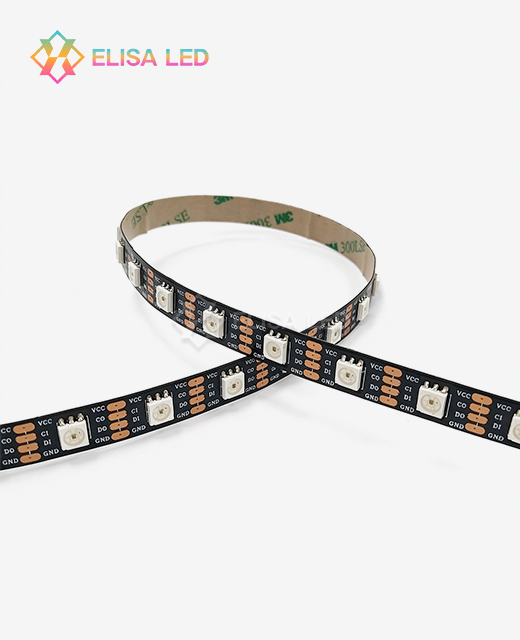
From Xuanan Lighting to ElisaLED
Application Areas
Decades of Expertise, Deep Insight into Your Needs
News Display


blog Display
Without compromising brightness or colour accuracy, a flexible LED wall washer is a linear light that can be bent to follow curved walls, columns, bridges and building facades. When I specify lighting for curved façade projects on three separate continents, the five questions that always come up are bend radius, beam angle, IP rating, voltage, and control protocol. This document offers straightforward answers to all of the checklists I provide suppliers prior to approving a design. At the end, you will know exactly what to request and what to decline.
What Is a Flexible LED Wall Washer?
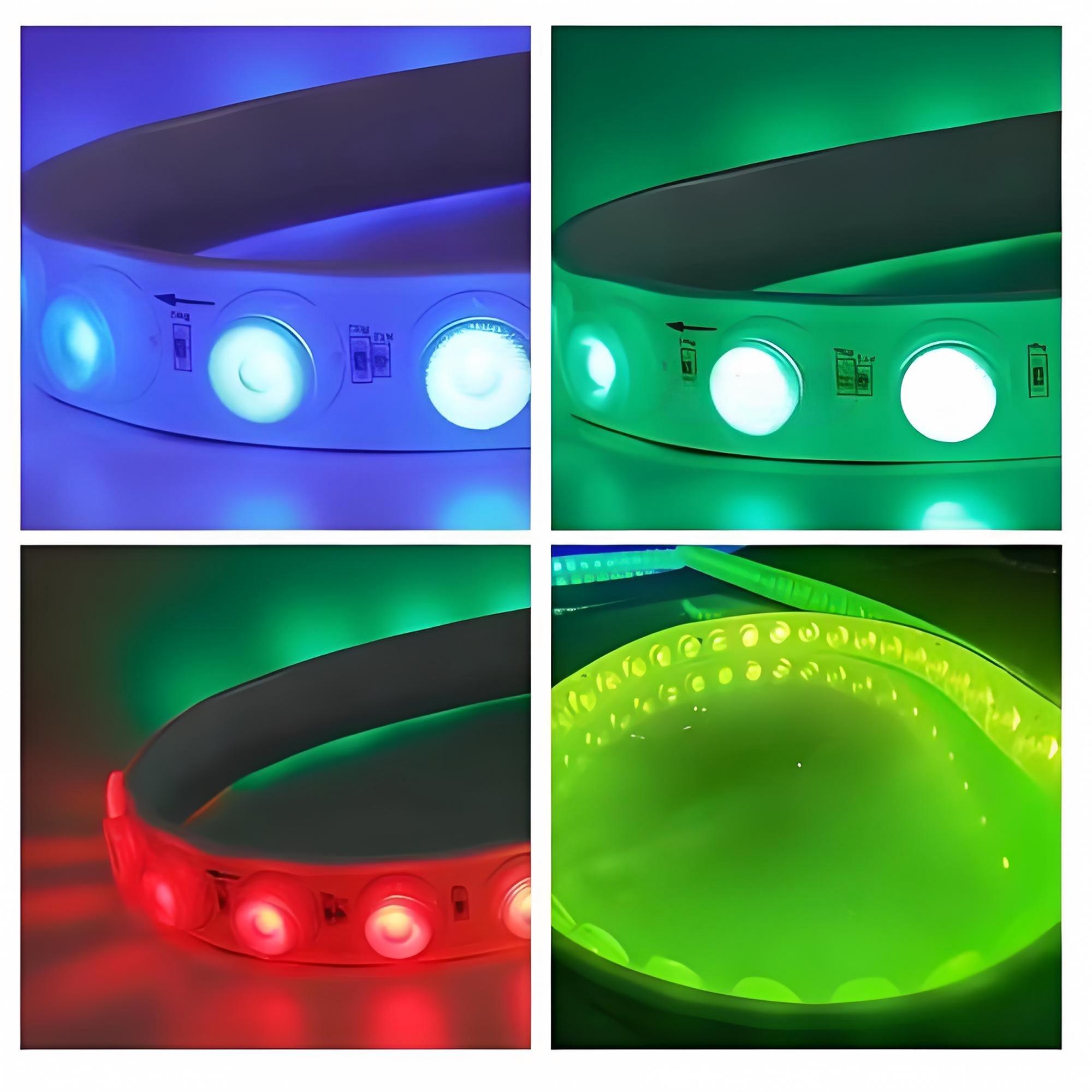
A "flexible LED wall washer" is a linear light fixture that can be twisted to evenly spread light over flat or curved surfaces. A row of LEDs and a lens that controls the light's dispersion are housed in a soft rubber sleeve. It is different from a typical LED strip since it has optics, a heat channel, and shielded end caps designed to work outdoors. Other dealers call it a wall grazer even though the equipment is the same.
Definition and Core Components
There are LEDs on a flexible PCB, a silicone housing, a lens for diffusing or focusing light, waterproof end caps, and wires that connect the LEDs. The device can be bent around columns and bridge piers because of the rubber tube that keeps rain and dust from getting to the LEDs. It's also lighter than a rigid wall washer's aluminium body, which makes it easier to move around the construction site. There is less waste because most things can be cut at certain points to fit the exact length of a wall. The length of a single run depends on whether the product is rated at 24V or 48V steady current. If it's 24V, the far end might start to dim.
What a Flexible Wall Washer Is Not
This is not the same as an LED strip light, a fixed wall washer, or flexible neon. This is a flexible LED wall washer. Most strip lights don't have an optical enclosure or lens, so the light they cast on a wall isn't even. It is impossible for rigid wall washers to go around corners without breaking into small pieces. They can only go in a straight line. Flexible neon focuses on making a continuous light line for interesting shapes instead of lighting the whole wall. Since providers use these names in a loose way, it is better to check the spec sheet than the marketing branding.
| Specification | Why It Matters |
|---|---|
| Bend direction and minimum radius | Confirms fit on your curved surface |
| Beam angle | Controls spread and light spill |
| Voltage (24V/48V) | Affects cable length and voltage drop |
| IP rating | Shows resistance to water and dust |
| CCT, RGB, or RGBW | Sets the available color effects |
| Control protocol | Determines compatibility with your controller |
| Housing material | Affects UV resistance and outdoor lifespan |
How Does a Flexible LED Wall Washer Fit Curved Surfaces?
The silicone casing of a flexible LED wall washer is capable of bending in several directions. This eliminates the need to cut the device into parts so it may take on the form of an arch, a bent column, or a bridge pylon. The three most popular designs produced by manufacturers are side-bending, top-bending, and 3D-flexible.
Bending Mechanisms You Should Know
Side-bending products suit horizontal curves like curved wall panels because they can bend both left and right. Top-bending goods are ideal for vertical designs like domed entrances because they can bend up and down. A "flexible LED wall washer" that can bend in both ways has been modelled in three dimensions. These models are used by installers to create spiral forms or sculptured facades. Ask your vendor which axis the thing bends on before you complete a sketch. Housings break and warranties are nullified when the incorrect axis is employed on-site.
Minimum Bend Radius Explained
This is the smallest form a product can accommodate without causing damage to the seals, PCB, or lens. The static bend radius of a typical outdoor-rated flexible LED wall washer ranges from 150 to 500 mm, however this might vary according on the housing's thickness. When writing, I always request the maximum angle of bend, the dynamic radius (if the run will bend again), and the static radius. The silicone may split, the solder connections may shatter, and water may enter the socket if you exceed the suggested radius.
These real-world uses of this ability to fit curves are based on it:
- Building facade contours. Municipal projects in Southeast Asia often wrap curved podium walls with one continuous run to avoid visible joints between segments.
- Bridge pylons and pedestrian tunnels. Engineering teams use side-bending fixtures on cylindrical columns where a rigid product would need dozens of short cuts.
- Retail and hospitality entrances. Curved canopy edges and domed lobby ceilings use 3D-flexible fixtures to keep the light line unbroken from end to end.
Flexible vs. Rigid LED Wall Washers: Which Is Better?
Each choice doesn't win every project. Which product fits best depends on the curve's shape, your price, and how long it will take to install.
Flexible Wall Washer vs. Rigid Wall Washer at a Glance
| Criterion | Flexible LED Wall Washer | Rigid LED Wall Washer |
|---|---|---|
| Curved-surface fit | Strong, within rated radius | Weak unless cut into segments |
| Straight-run efficiency | Good, needs support brackets | Often more efficient |
| Installation tolerance | Needs radius control | Simpler alignment |
| Transport and storage | Compact, coils for shipping | Bulkier, more space needed |
| Customization | Length, bend, color, controls | Usually fixed standard sizes |
| Best application | Arches, columns, curved facades | Long straight walls, bridge decks |
Flexible Wall Washer vs. LED Strip Light
An LED strip lamp and a flexible LED wall washer are identical at first glance. However, they vary in the housing and lens. From a certain distance, a wall washer is meant to disperse light uniformly over a wall. It uses a shaped optic to do this. Since a basic strip light lacks a lens, it works better as a concealed accent line than as a floodlight on a building's front. Select a strip light for inside concealed closet illumination. Select a "flexible LED wall washer" if the surface requires uniform, glare-free light from a few feet away.
Which Bend Radius Should You Choose for Your Project?
Choose a product whose minimum radius is smaller than the curve you will be installing it around, plus some.
Radius Selection Checklist
- Don't guess the architectural radius from a drawing; instead, measure it on-site.
- Write down whether the curve is flat, curved, horizontal, vertical, or a mix of these.
- Pick a bendy LED wall washer with a rating less than or equal to the radius you measured.
- Allow for mounting brackets, thermal expansion, and small mistakes in the construction.
- Before you give the go-ahead for mass production, ask for a real piece and bend it on a model.
Radius Risks and How to Avoid Them
| Risk | What Causes It | How to Avoid It |
|---|---|---|
| Wrong bend direction | Product ordered without axis confirmation | Confirm bending-axis drawings first |
| Radius exceeded on-site | Installer unaware of rated limit | Print the minimum radius on packaging |
| Uneven beam after bending | Optics distort past the rated curve | Test a full curved section before ordering |
| Seal failure | Twisting or folding during install | Follow the manufacturer's bend instructions |
What Beam Angle and Brightness Work Best for Curved Facades?
Your flexible LED wall washer can make a tight accent line or a soft, wide wash of light depending on the angle of the beam.
Beam Angle Ranges for Facade Lighting
- 10°–20°: narrow accents for slim columns and distant facades.
- 20°–40°: focused highlighting with limited spill onto neighboring surfaces.
- 40°–60°: balanced coverage that fits most curved commercial facades.
- 60° and wider: soft, broad light for walls viewed up close.
Match the angle of the beam to the distance you want to see. A storefront 20 meters away needs a beam that is not as wide as a hallway wall 3 meters away.
How to Compare Brightness Fairly
When a foldable LED wall washer is fixed and operating hot, the number of watts doesn't really tell you how bright it is. Examine lumens per meter, watts per meter, and lumens per watt at the same colour temperature. The output that has been provided after heat losses, not the rated maximum of the LED chip. According to the U.S. Department of Energy (2023), LED output actually decreases as junction temperature rises. This indicates that brightness is directly impacted by thermal design. Photometric files should be utilised in accordance with the International Commission on Illumination's measuring guidelines (CIE, 2023). In order to prevent significant power loss over the course of its intended lifespan, a well-made flexible LED wall washer manages heat via its silicone shell and inner core.
What IP Rating and Materials Do You Need for Outdoor Installation?
Outside projects fail more often because of water damage than LED burnout, so the IP rating of your flexible LED wall washer is just as important as how bright it is.
Understanding IP65, IP66, and IP67
The International Electrotechnical Commission uses two numbers to describe IP grades in IEC 60529 (International Electrotechnical Commission, 2013). The first number is for dust protection, and the second number is for water protection.
- IP65: dust-tight, protected against low-pressure water jets.
- IP66: dust-tight, protected against powerful water jets.
- IP67: dust-tight, protected against temporary immersion under set conditions.
IP67 doesn't mean that a gadget can stay underwater all the time. Compare the grade to the real amount of exposure. Coastal walls that get a lot of rain need IP66 or IP67, but IP65 may be enough for soffits that are protected.
Documents to Request From Your Supplier
Before you agree to buy a lot of any flexible LED wall washer, ask for:
- An IP test report that lists the exact model and setup that was tested.
- The safety paperwork for luminaires refers to IEC 60598-1 (International Electrotechnical Commission, 2020).
- European Commission (2011) says that exports to the EU must include RoHS and REACH statements.
- UV resistance data for the silicone housing, since silicone that hasn't been tested can turn yellow and break after a year or two of being in the sun.
- There should be directions on how to close the cable and connection, since an IP number doesn't mean anything if the connector is left open on-site.
- Underwriters Laboratories (2023) says that luminaires must be certified to UL 1598 for projects going to the US.
—An IP test report that lists the exact model and settings that were tried.
IEC 60598-1 (International Electrotechnical Commission, 2020) is used in the luminaire safety documents.
EU packages must include RoHS and REACH statements (European Commission, 2011).
How Do You Compare Cost, Lifespan, and Supplier Quality?
Just because an LED wall washer costs a certain amount per unit doesn't mean it costs a lot to run over time.
Total Cost of Ownership Factors
- The price per metre is usually between $8 and $30, but it depends on the IP rating, colour mode, and control protocol.
- To finish the installation, you'll need power supplies, controllers, connectors, brackets, and end caps.
- Costs for goods, customs duties, and following the rules in the country where you're going.
- During the whole operating schedule, the facade lights are usually on for 8 to 12 hours at nite.
- Replacement cost and labour if a part breaks and needs to be swapped out on-site.
- How long the warranty lasts and how quickly the parts are sent.
How to Verify Supplier Quality Before Volume Orders
Before you place an order, ask to see a sample of a container on a model of your real curve. If you want to buy that sample, make sure you check the bend radius, beam angle, colour match, and IP seal. Look at the batch traceability information for the LEDs, the driver, and the housing material. If there is a problem, suppliers who keep an eye on batch numbers don't have to guess where it came from.
Before sending out a batch of flexible LED wall washers, Elisa LED checks them for damage from light, water, and old age. Elisa started Elisa LED in 2025, after working in the lighting business for more than 10 years. It got its start with the name Xuanan Lighting. The company offers OEM/ODM services such as PCB design, LED chip selection, housing, and packaging. They make goods in 7–10 days, ship to more than 50 countries, and answer questions within a day. LED strip and wall washer things come with a 2–5 year warranty.
How Do You Install a Flexible LED Wall Washer Correctly?
It doesn't matter how good the hardware is if the installation skips a few easy steps.
Pre-Installation Checklist
- Before you unroll the fixture, make sure you know the surface radius, the direction of the mounting, and the drainage path.
- Compare the length of the run to the power load and voltage drop. If you run a flexible LED wall washer over 20 meters at 24V, you might need to plug it in from both ends.
- Check each unit for damage from shipping, such as loose end caps or cracked seals.
- Before putting it on the wall, power up a full circuit on the ground.
Step-by-Step Installation Sequence
- Along the curve, mark the brace points and lighting line.
- Place the fastening clips or tubes at the distances recommended by the maker.
- Slowly bend the bendable LED wall washer around its recommended circle.
- Do not fold, twist, or let the weight of the fixture rest on the cable.
- Use the waterproof plugs that come with the kit to connect the power and control wires.
- Make sure that every outdoor joint and cable path is sealed so that water doesn't pool at the low point.
- As you run, make sure the colours match, the lights dim, and the lighting is even.
Troubleshooting Common Problems
| Symptom | Likely Cause | Fix |
|---|---|---|
| Uneven brightness | Voltage drop over a long run | Add power injection points |
| Color mismatch between sections | Mixed LED batches | Request matched-batch production |
| Flicker | Driver and controller mismatch | Confirm protocol compatibility before install |
| Water inside housing | Damaged seal or open connector | Replace the part and reseal properly |
Conclusion
Don't just look at price when choosing a "flexible LED wall washer." Look at the curve it needs to follow as well. Before you sign off on a drawing, make sure you understand the bend radius, beam angle, IP grade, and control protocol. Before you make a large order, ask for test results and a sample to look at. A fixture that fits the real conditions of your project saves you time, money, and trouble during handovers and warranty claims.
FAQ
What is a flexible LED wall washer?
A flexible LED wall washer is a linear light that can be bent to evenly light up walls, columns, bridges and other curved building parts. It has better light control than a plain LED strip because it has a lens and a sealed housing.
What IP rating should I choose for an outdoor flexible LED wall washer?
For most open faces, IP65 or IP66 will work. IP67 is good for places where it rains a lot or where there is a chance of floods. Always make sure that the rating includes all of the installed parts, not just the main housing.
Is RGB or RGBW better for facade lighting?
Because it has a separate white channel along with the colour channel, RGBW is generally better for business walls. RGB by itself can make colour effects, but it's not as good as white light for general lighting.
Should I choose a 12V or 24V flexible LED wall washer?
24V is better than 12V for most exterior and bridge work because it has less voltage drop over longer wire runs. 12V can still be used for short runs inside that are less than five meters long.
How do I compare brightness between two flexible LED wall washer products?
Check out the given power, brightness per metre, and watts per metre at the colour temperature that your project needs. The nominal wattage doesn't tell you how bright the light will be once it's set up and warm.
What documents should a flexible LED wall washer supplier provide?
Ask for a wiring diagram, a datasheet, an IP test report, electrical safety documentation, RoHS and REACH declarations, and an IP test report. You can use these papers to check claims instead of taking marketing copy at face value.
Ready to Source a Flexible LED Wall Washer for Your Next Project?
Facade deadlines don't wait for slow sampling or mismatched controllers. Elisa LED works as a flexible LED wall washer manufacturer for architectural, landscape, and stage lighting projects across Europe, the Americas, and Southeast Asia, with drawing deepening, fast sampling, and 7–10 day production once your order confirms. Send your project brief, including surface radius, length, IP rating, and control protocol, to inquiry@elisaled.com, and our team will reply within 24 hours with a quote and sample timeline.
References
1. International Electrotechnical Commission. "IEC 60529 – Degrees of Protection Provided by Enclosures (IP Code)." 2013.
2. International Electrotechnical Commission. "IEC 60598-1 – Luminaires: General Requirements and Tests." 2020.
3. European Commission. "Directive 2011/65/EU on the Restriction of Hazardous Substances (RoHS)." EUR-Lex, 2011.
4. U.S. Department of Energy. "Solid-State Lighting Program." Office of Energy Efficiency & Renewable Energy, 2023.
5. Underwriters Laboratories. "UL 1598 Standard for Luminaires." UL Standards & Engagement, 2023.
6. International Commission on Illumination (CIE). "CIE Standards and Publications."
Author: Daniel Carter, Senior LED Lighting Solutions Engineer
Daniel Carter has specified and tested LED lighting systems for commercial and architectural projects for more than 12 years. He reviews IP test reports, photometric files, and bend-radius specifications for facade and landscape lighting projects across North America, Europe, and Southeast Asia. Daniel writes about LED lighting selection to help procurement teams and project engineers ask better questions before they place an order.
A non-pixel LED strip is a linear light source where LEDs run as one continuous circuit instead of individually controlled points. For cove lighting, that continuous circuit produces the smooth glow architects and retail buyers want, with no dark gaps or chasing effects. This guide covers voltage, density, color, IP rating, and supplier checks so your next order — whether it's 500 meters or 50,000 meters — lands on spec the first time.
What Is a Non-Pixel LED Strip for Cove Lighting?
Non-pixel LED strip definition and core function
A "non-pixel LED strip" is a bendable circuit board that has LEDs on it that work together through shared power lines instead of being accessible as separate points. This word refers to the architecture of the controls, not the brightness or quality of the build. As long as the whole strip (or a clear zone) turns on, off, or changes color as a single unit, it doesn't matter if it's single-color, dual-color-temperature, or even RGB.
The word "non-pixel" tells you how the strip is controlled, not how bright it is or how well it's put together. Some buyers think "non-pixel" means "basic," which is a mistake that means they don't set the right standards for a cove for a retail main store.
How non-pixel strips work inside a cove
There are cut points every 2–10 cm on the strip, which is made up of LEDs that are lined up in parallel groups along copper traces. Each section gets current controlled by a resistor and a steady voltage (12V or 24V). This keeps the brightness the same across all cut lengths. The whole strip reacts to a PWM signal, a 0-10V signal, or an analog voltage drop from the driver to dim the lights. That action of a single circuit is what makes cove lighting look like a single line of light instead of a string of dots.
How Do Non-Pixel and Pixel LED Strips Differ?
When buying things for building projects, people sometimes mix up addressable pixel tape and non-pixel LED strip. This is a mistake that costs a lot of money because it leads to the wrong controls, data cables, and final results.
Comparison table: non-pixel vs pixel vs addressable strips
| Criterion | Non-pixel LED strip | Pixel / addressable strip |
|---|---|---|
| Control | Whole strip or zone together | Individual LED or pixel groups |
| Effect | Smooth, uniform glow | Chasing, animation, video mapping |
| Wiring | Power + optional dimmer wire | Power + data signal line |
| Cove suitability | Strong — ideal for ambient light | Rare — mainly for feature walls |
| Typical products | Standard 12V/24V tape, COB tape | 26mm LED Pixel light, 45mm LED Pixel light, D40 LED Pixel Tube |
Control ICs like WS2811 or DMX512 are used to drive each point separately in products like the 26mm LED Pixel light or D40 LED Pixel Tube. This is great for media facades but too much and more likely to break for a quiet cove above a reception desk.
When to choose each architecture
Choose a "non-pixel LED strip" if you want even background lighting, backlighting for signs, or a glow that's built into furniture and easy to change colors. You should only use pixel or addressable tape for projects that need synchronized animation, video effects, or individually mapped color points. In these cases, it's more like using entertainment lighting than cove architecture.
Which Specifications Matter Most When Specifying Cove Lighting Strips?
Core specification checklist
Set these prices down in writing before you ask for a quote:
- Input voltage (12V, 24V, or 48V DC) and confirmed power supply match.
- Lumens per meter, tested at the finished strip level, not at the bare LED chip.
- LED density and cut-point spacing, since these two figures directly affect dot visibility.
- Color temperature (2700K–6000K) and CRI, plus R9 if skin tone or food display matters.
- PCB width, copper weight, and IP rating matched to the installation environment.
- Dimming compatibility — PWM, 0-10V, DALI, or TRIAC — confirmed against your controller stock.
Reading a supplier datasheet correctly
A lot of datasheets list lumens that were measured at the LED box level, not at the strip level after diffusion losses. Get in touch with the factory and ask if this number has been checked on the final reel. Also, check to see if the power number is nominal or recorded under load. In cheap strips, the difference between the two can be 10–15%. A trustworthy non-pixel LED strip supplier will give you test conditions when you ask for them, not just a marketing number.
What LED Density Prevents Visible Dots in a Cove?
SMD vs COB non-pixel strips
Individual diodes are placed at set distances on SMD strips. This means that lower-density SMD tape (60 LEDs/m or less) can show dots when looked at closely or when it reflects off of a shiny ceiling. COB (chip-on-board) strips cover a densely packed phosphor line with a continuous line, making a smoother line that doesn't have any gaps. Either way, the strip is still a non-pixel LED strip — the LEDs share a circuit and switch as one zone, so density affects dot visibility, not control architecture. For dot-free coves that are very important, I usually suggest starting at 120 LEDs/m or higher and testing the sample in a profile mock-up before placing an order for a lot of them.
Setback distance and profile testing
Density doesn't guaranty a result without dots on its own. It depends on how far the strip is from the opening of the viewable cove, how deep the metal channel is, and whether a frosted diffuser is placed on top of the strip. If you put a strip three centimeters from a shiny white ceiling, it will still show dots even though it looks great on a bench. Before putting in the specs for a full production run, you should always test the strip inside the real shape and at the real viewing angle.
Which Color Temperature, CRI, and Voltage Should You Choose?
Matching CCT and CRI to the application
2700K to 3000K is a warm and cozy range of colors for lobbies and living areas. Most retail and business coves are set to 3500K to 4000K for a balanced, energetic look. In general, CRI 80+ is fine for business use. But for a cabinet showing jewelry, food, or fabric, you need CRI 90+ with documented R9 performance, because low R9 values make reds look dull in "good" lighting.
12V, 24V, or 48V: making the right call
| Factor | 12V | 24V | 48V |
|---|---|---|---|
| Best for | Short runs under 5m, tight furniture cavities | Standard commercial cove runs | Long architectural runs, high-power jobs |
| Voltage drop | Higher over distance | Lower, more forgiving | Lowest current draw |
| Cut interval | Shorter, more flexible | Slightly longer segments | Longest segments |
What IP Rating Fits Each Cove Environment?
IP rating selection by location
| Environment | Typical rating |
|---|---|
| Dry indoor ceiling cove | IP20, protected from contact |
| Humid indoor space (bathroom, spa) | IP44 to IP65 |
| Outdoor covered cove | IP65 or higher |
| Direct wash-down or wet exposure | IP67/IP68, full potting |
| Rating for the |
Common sealing mistakes
A lot of the time, cut ends and connecting spots are missed during installation. This lowers the run's IP rating without anyone noticing. The manufacturer's IP test results usually follow the IEC 60529 method (IEC, 2013), so make sure you know if the rating only applies to the bare non-pixel LED strip or to the whole sealed assembly with end caps.
How Do You Calculate Strip Length and Power Supply Needs?
Power supply sizing formula
Once you have the paper number for power per meter, it's easy to do the math:
"Total strip power" equals "watts per meter × length installed."
Suggested power source size = total strip power × 1.2 to 1.3
A 20-meter run at 14.4 W/m uses a strip load of 288W. Adding the 20–30% safety range gives you a 350–375W supply, which is more than enough to account for changes in the room temperature and the fact that drivers age over time.
Procurement checklist for bulk orders
- Confirm MOQ, standard reel length, and cut tolerance before sampling.
- Lock in lead time — most reliable factories quote 7–10 days for standard SKUs.
- Clarify payment terms and account for monthly restock cycles if you're running a 7–15 day reorder pattern.
- Request datasheets, wiring diagrams, and test reports with the first shipment, not after a complaint.
How Should You Evaluate a Non-Pixel LED Strip Supplier?
Manufacturing capability checklist
A reliable non-pixel LED strip supplier does quality control on their own for LED binning, PCB assembly, and final testing, instead of hiring someone else to do it. Ask for LM-80 lumen maintenance data (IES, 2015) and TM-21 lifetime projections (IES, 2011). These reports show not only how bright the LEDs are on the first day, but also how they age when they are used. Batch tracking, which means connecting a finished reel to its LED lot and PCB run, is most important when a customer reports a color difference six months after the installation.
OEM and ODM considerations
When people buy under their own brands, the real test is to see if a factory can handle neutral packaging, custom SKU coding, and small test runs of 500 to 1,000 meters without raising the price per meter. Elisa LED was started in 2025 by Elisa, who worked in the lighting business and had been making LEDs since 2016 under the brand name Xuanan Lighting. The OEM/ODM process was designed to fill this vacancy. Every unique batch goes through aging tests, waterproof tests, and photometric checks. It comes with a 2–5 year guarantee and can be sent to more than 50 countries.
Conclusion
There are five things you need to think about when choosing a "non-pixel LED strip" for cove lighting: voltage, color quality, IP rating, and supplier reliability. If you set the setback distance and spacing correctly, the dots will go away. If you set the power correctly, long runs will stay bright all the way through. Before the first large order ships, make sure that the CRI matches the application, that the IP rating matches the real world, and that you can trust the test data that your provider has given you. Approve every new spec with a real mock-up, not just a paper. This one step finds most problems before they get to the store shelf or the client's roof.
FAQ
What is a non-pixel LED strip?
A non-pixel LED strip is a linear LED product where sections of LEDs operate together instead of being individually controlled. It's the standard choice for continuous ambient, cove, and signage lighting.
What is the difference between a non-pixel and addressable LED strip?
A non-pixel LED strip controls a whole zone at once. An addressable strip, like a 45mm LED Pixel light or D40 LED Pixel Tube, controls each LED separately and supports chasing or video effects.
Is 12V or 24V better for cove lighting?
24V works better for most commercial coves because it lowers voltage drop over longer runs. 12V still suits short furniture-embedded lengths or compact spaces.
How can I prevent visible dots in a cove?
Use a non-pixel LED strip with 120 LEDs/m or higher, add setback distance from the visible opening, and test the sample inside the actual aluminum profile before ordering in bulk.
What IP rating do I need for a cove installation?
Dry indoor coves usually need only IP20. Humid or outdoor coves need IP44 to IP65, and hazardous industrial settings require specialty products like an Explosion-Proof LED strip rated for ATEX compliance.
How much power supply capacity should I order?
Multiply watts per meter by installed length, then add 20–30% margin. A 288W calculated load typically needs a 350–375W power supply for safe long-term operation.
Ready to lock in your next non-pixel LED strip order?
Sourcing delays and color-match rejects cost real margin during peak renovation season. Elisa LED supplies non-pixel LED strip products in 12V, 24V, and 48V, with private-label packaging and 7–10 day production for standard SKUs. Reach our team at inquiry@elisaled.com with your voltage, CCT, and length requirements, and we'll return a quote with stock status the same day.
References
1. International Electrotechnical Commission. IEC 60529 (2013) — Degrees of protection provided by enclosures (IP Code). Referenced in the IP rating selection section.
2. Illuminating Engineering Society. IES LM-80-15 (2015) — Measuring lumen maintenance of LED light sources. Referenced in the supplier evaluation section.
3. Illuminating Engineering Society. IES TM-21-11 (2011) — Projecting long-term lumen maintenance of LED light sources. Referenced in the supplier evaluation section.
4. European Commission. RoHS Directive 2011/65/EU — Restriction of hazardous substances in electrical and electronic equipment.
5. European Commission. REACH Regulation (EC) No. 1907/2006 — Chemical substance registration, evaluation, authorisation, and restriction.
6. U.S. Department of Energy. Solid-State Lighting Program — LED performance, testing, and application resources.
About the Author
Daniel Carter is a Senior LED Lighting Solutions Engineer with over a decade of experience specifying LED systems for commercial and architectural projects across North America, Europe, and Southeast Asia. He has worked directly with distributors, cabinet manufacturers, and private-label brands on voltage selection, photometric testing, and supplier quality audits, and writes to help B2B buyers avoid costly specification mistakes before production runs ship.
When designing addressable LED projects, choosing the right driver IC is one of the most important decisions you will make. Two popular options from WorldSemi are the WS2815 and the WS2818B. Both operate at DC12V and feature breakpoint continuation, making them more reliable than the older 5V WS2812B. However, they are not interchangeable.
This article from Elisa LED breaks down the real technical differences so you can choose the right chip for your application.
Quick Comparison
| Feature | WS2815 | WS2818B |
|---|---|---|
| Voltage | DC12V | DC12V |
| Package Type | Built-in IC (inside 5050 LED) | External IC (SOP8 package) |
| Individually Addressable | Yes (1 LED = 1 pixel) | No (1 IC controls 3 or 6 LEDs) |
| Breakpoint Continuation | Yes (dual signal) | Yes (dual signal) |
| PWM Frequency | 4kHz | 4kHz |
| Gray Scale | 256 levels | 256 levels |
| Data Rate | 800Kbps | 800Kbps |
| Typical Application | High-resolution pixel displays | Cost-effective long runs |
The Fundamental Difference: Built-in vs External IC
The most important distinction is where the driver IC is located.
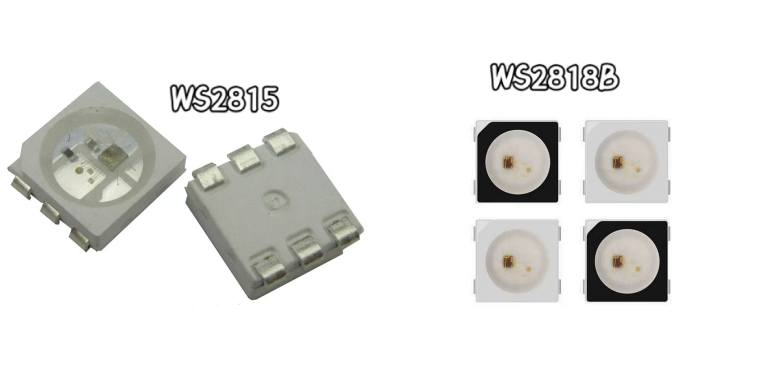
WS2815 is an integrated solution. The control circuit and RGB chip are packaged together inside a single 5050 LED component. Every LED is a complete, self-contained pixel.
WS2818B is a separate driver IC. It comes in an SOP8 package and is soldered onto the PCB alongside the LEDs. One WS2818B chip controls 3 LEDs at 12V or 6 LEDs at 24V.
What This Means in Practice
| Aspect | WS2815 | WS2818B |
|---|---|---|
| Pixel Resolution | Highest (every LED is addressable) | Lower (pixels are grouped in 3s or 6s) |
| PCB Complexity | Simple (one component per pixel) | More complex (IC + LEDs) |
| Animation Smoothness | Ultra-smooth, per-LED control | Smoother than WS2811, but less detailed |
| Best For | Detailed graphics, close viewing | Long runs, distance viewing, budget projects |
Key Takeaway: If you need true per-LED control for intricate animations, WS2815 is the clear choice. If you need cost-effective long runs where viewers are far away, WS2818B delivers excellent value.
Shared Strengths: Why Both Are Excellent Choices
Both chips share several critical advantages over the older WS2812B.
1. DC12V Operation Reduces Voltage Drop
At 12V, the current draw is roughly one-third of a 5V system for the same power. This dramatically reduces voltage drop over long cable runs.
| Voltage | Typical Max Run (without injection) |
|---|---|
| 5V (WS2812B) | ~5 meters |
| 12V (WS2815 / WS2818B) | 10–15+ meters |
2. Breakpoint Continuation for Reliability
Both chips feature dual signal lines. If one LED (WS2815) or one IC (WS2818B) fails, the signal bypasses the failure and continues downstream.
This is a massive reliability improvement over single-signal chips like WS2812B.
3. 4kHz PWM Refresh Rate
Both chips offer a 4kHz PWM refresh rate, providing:
-
Flicker-free performance for most video recording
-
Smooth dimming and color transitions
Which Should You Choose?
Choose WS2815 If:
-
You need true per-LED addressability for detailed animations, text, or video displays
-
Your viewing distance is close (within a few meters)
-
You want the simplest PCB design (no external ICs to place)
-
Your budget allows for a premium chip
Choose WS2818B If:
-
You need long runs with minimal power injection (12V or 24V operation)
-
Viewers will be at a distance where grouped pixels are not noticeable
-
You need a fault-tolerant design for hard-to-reach installations
-
Cost is a primary concern for large-scale projects
Summary
| WS2815 | WS2818B | |
|---|---|---|
| Addressability | 1 LED = 1 pixel | 1 IC = 3 or 6 LEDs |
| Resolution | Highest | Good for distance viewing |
| Cost | Higher | Lower |
| Reliability | Excellent (built-in) | Excellent (external IC) |
| Best For | High-detail displays | Long runs, budget projects |
The bottom line: There is no “better” chip—only the right chip for your specific project. WS2815 excels when pixel-level detail matters. WS2818B delivers exceptional value for long-distance, fault-tolerant installations.
FAQ
1. What is the main difference between WS2815 and WS2818B?
The main difference is the IC packaging. WS2815 uses a built-in IC inside each 5050 LED, so every LED is individually addressable. WS2818B uses an external SOP8 driver IC, and one IC controls 3 LEDs at 12V or 6 LEDs at 24V.
2. Are WS2815 and WS2818B interchangeable?
No. Although both operate at DC12V and support breakpoint continuation, they have different IC architectures, PCB layouts, and addressing methods. They are not direct replacements for each other.
3. Which chip is better for high-resolution LED displays?
WS2815 is better for high-resolution displays because each LED is a separate pixel. This provides smoother animations and more detailed graphics, especially for close-viewing applications.
4. Which chip is more cost-effective for long LED runs?
WS2818B is generally more cost-effective for long runs because one IC controls multiple LEDs. It is ideal for large-scale installations where viewers are farther away and grouped pixels are not noticeable.
5. Do both WS2815 and WS2818B support breakpoint continuation?
Yes. Both chips feature dual signal lines and breakpoint continuation. If one LED or IC fails, the signal can bypass the failure and continue to the downstream LEDs, improving reliability.
6. Can I use WS2815 and WS2818B in the same LED project?
In most cases, no. They use different driver architectures and addressing schemes. Mixing them in the same signal chain is not recommended unless the control system is specifically designed for it.
7. What power supply should I use for WS2815 or WS2818B LED strips?
Both are designed for DC12V operation. For 24V versions of WS2818B-based products, use a 24V power supply. Always match the power supply voltage to the LED strip specification and allow enough current capacity for your project.
8. Which chip does Elisa LED recommend?
It depends on your project. Elisa LED recommends WS2815 for high-detail, close-viewing pixel displays and WS2818B for cost-effective, long-distance, fault-tolerant installations. Contact Elisa LED with your project requirements, and we will recommend the optimal solution.
Need Help Choosing the Right IC for Your Project?
At Elisa LED, we offer LED strips based on WS2815, WS2818B, and other popular ICs. Tell us your project requirements, and we will recommend the optimal solution.
Contact Elisa LED today for samples, technical support, or a quote.