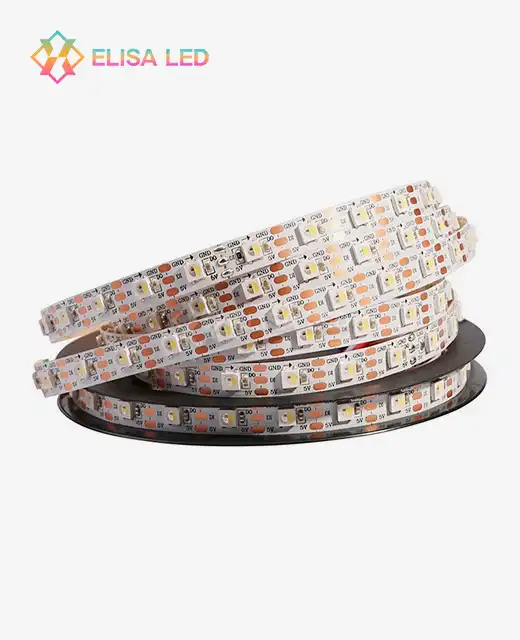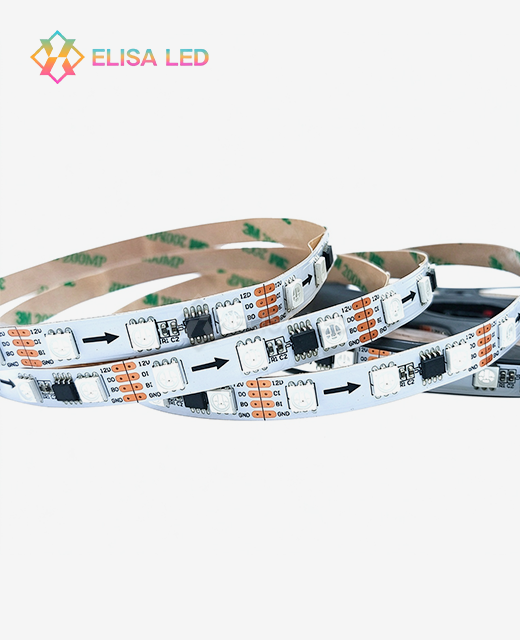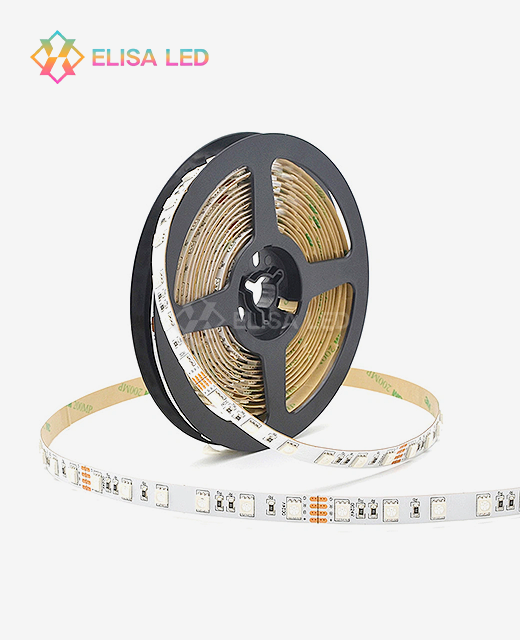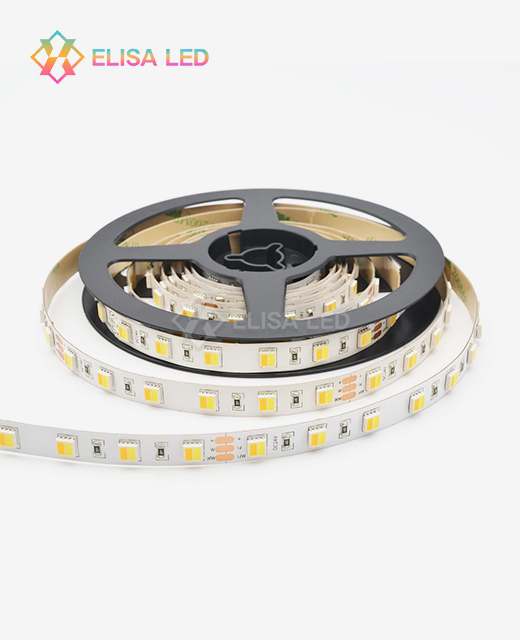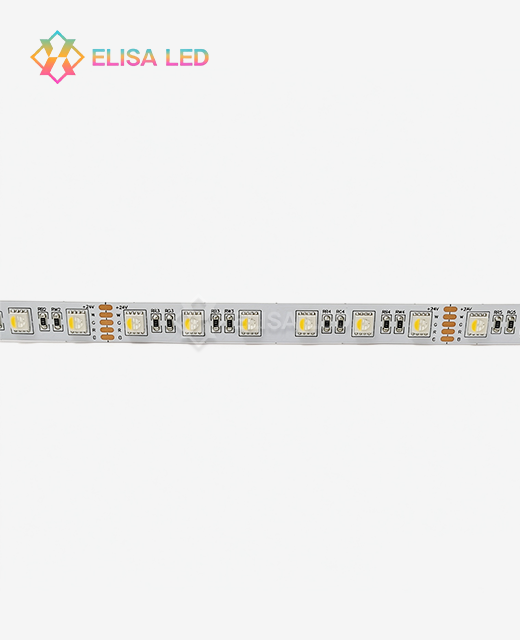
60LEDs/m 5050 RGBW
Brightness: 504lm/m
MOQ: 5M
Lead Time: 5-7days
PCB width: 10mm
IP Rating: IP20/IP65/IP67/IP68
MOQ: 5M
Lead Time: 5-7days
PCB width: 10mm
IP Rating: IP20/IP65/IP67/IP68
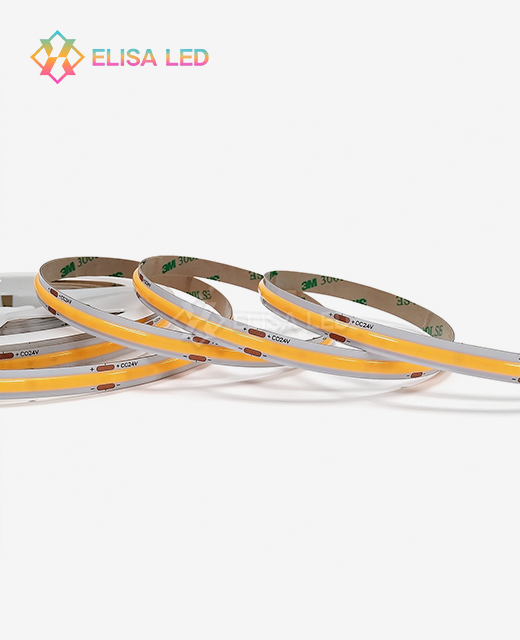
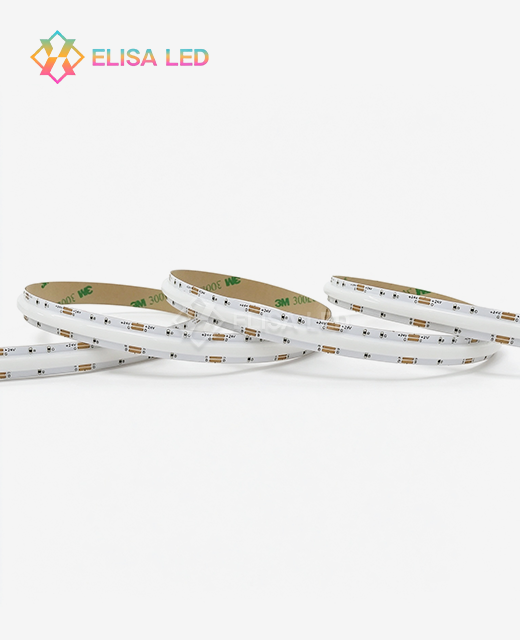
The 60LEDs/m 5050 RGBW LED strip integrates a dedicated White diode alongside Red, Green, and Blue channels inside a single 5.0 mm × 5.0 mm SMD package. It consumes 19.2 W/m of electricity and runs at DC12V or DC24V, providing a uniform output of 720 lm/m. Instead of ordinary RGB strips that provide a blue-ish mixed white, the specialised white chip uses a phosphor-based technique to deliver pure white light. Suitable for outdoor signage and inside cove lighting, this strip is available in IP20, IP65, IP67 and IP68 certifications.

The 5050 RGBW chip has four diodes, Red, Green, Blue, and White, all crammed into one small package. The designation “5050” refers to the 5.0 mm x 5.0 mm footprint of the chip, which is bigger than the regular 2835 chips and provides more light output per LED.
60 LEDs per metre density is a good blend of brightness and heat control. With an aluminium profile, you receive steady light output without dots, and without the heat burden of greater density strips.
The dedicated White channel is the key functional advantage. It eliminates the color-shadowing and uneven distribution common in RGB-only strips, especially at close viewing distances.
| Parameter | Details |
|---|---|
| Part Number | XXA-STRIP-60D5050RGBW |
| LED Type | SMD 5050 RGBW |
| LED Density | 60 LEDs/m |
| PCB Width | 12 mm |
| Input Voltage | DC12V / DC24V |
| Power Consumption | 19.2 W/m |
| Luminous Output | 720 lm/m |
| IP Rating | IP20 / IP65 / IP67 / IP68 |
| MOQ | 5 meters |

RGB strips mix red, green, and blue to simulate white — the result is often a cold, purple-tinted light that performs poorly for functional illumination.
RGBW addresses this limitation directly. The specialised white diode employs a phosphor-based technique that produces a clear white appropriate to task lighting, ambient layers and architectural applications. One strip may provide ornamental colour effects and real functioning white lights.
This makes the 60LEDs/m 5050 RGBW ideal for applications where ambiance and functionality need to be switched, such as hotel lobbies, restaurants, retail interiors and smart home applications.
Under 5m runs 12V is usually plenty. 24V is worth considering for longer runs.
60 leds/meter current load increases with distance. The 24V supply lowers the voltage drop to assist maintain constant brightness from start to finish. In 12V systems the cut interval is every 3 LEDs (5cm), in 24V every 6 LEDs (10cm).
Always size your power supply to the entire wattage of your run, plus at least 20% overhead for safe operation.
Architectural Cove & Facade Lighting
In residential and hospitality projects, this strip handles both ambient white and color accent layers. The white channel supports functional daytime lighting, while the RGB channels allow atmospheric effects — both running from a single installation.
Commercial Signage & Branding
Paired with IP67-rated housing, the 60 LEDs/m density produces smooth color transitions in light boxes and channel letters. The chip spacing reduces visible hot spots in close-proximity viewing conditions.
Smart Home & Circadian Rhythm Lighting
The strip is compatible with DMX512, Zigbee, and Matter-based controllers. The white channel can be adjusted throughout the day to support circadian rhythm schedules, with color modes available for other scenes.
Theatrical & Stage Production
The strip suits studio sets and stage environments where RGB animation and true white light need to run simultaneously, including setups where camera flicker sensitivity is a factor.

Mounting the strip inside an aluminum profile is strongly recommended. At 16 W/m, the aluminum acts as a passive heat sink, helping extend LED lifespan and maintain color consistency over time.
A 4-channel RGBW PWM controller is required — a standard 3-channel RGB controller will not activate the White channel and negates the primary benefit of choosing an RGBW strip.
ElisaLED's team can advise on compatible controllers, power supplies, and profile options during the project consultation stage.
ElisaLED supports OEM/ODM customization covering PCB design, LED chip selection, controller IC integration, housing, and packaging. White color temperature — Warm, Natural, or Cool White — can be specified at the time of order.
Custom lead times and shipping options vary by order size and destination. Contact us directly to discuss project requirements and timelines.
Q:What is the difference between RGB, RGBW, and RGBCCT strips?
A:RGB strips produce color effects only. RGBW strips add a dedicated white channel for true white light. RGBCCT strips combine RGB with tunable warm and cool white, offering the widest range of color and white lighting options.
Q:Should I choose 12V or 24V for this strip?
A:24V is generally recommended for runs over 5 meters. It reduces current load and helps minimize voltage drop, keeping brightness more consistent across the full length.
Q:What controller does a 5050 RGBW strip require?
A:A 4-channel RGBW PWM controller is required. A standard 3-channel RGB controller will not activate the white channel.
Q:Can the strip be cut to size?
A:Yes. On a 12V setup, cut every 3 LEDs at the designated copper pads. On 24V, cut every 6 LEDs.
Q:What should be considered before choosing an LED strip?
A:Review LED density, voltage, color or white lighting needs, control system type (RGB, RGBW, RGBCCT, or CCT), IP rating, installation environment, and the cut length your project requires.
Q:Which strip is best for tunable white lighting?
A:The 120LEDs/m 2-in-1 Dual White LED Strip handles tunable white best. For projects that need both color and white, the product or the RGBCCT version is worth considering.
Have a project in mind for 60LEDs/m 5050 RGBW? Reach out to us at inquiry@elisaled.com. We're happy to help with product selection, custom orders, and project consultation.