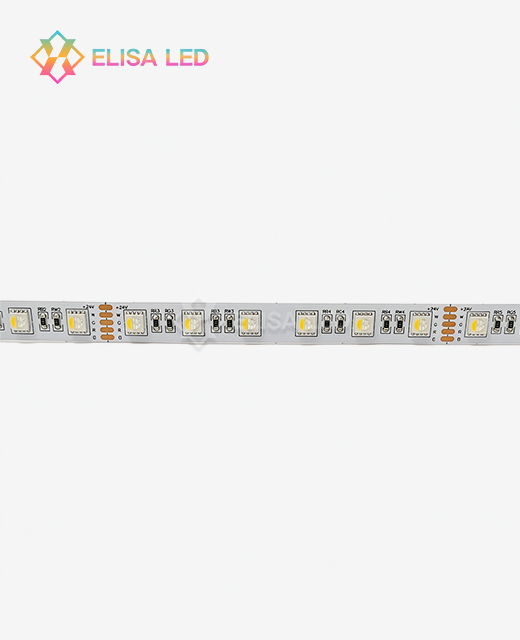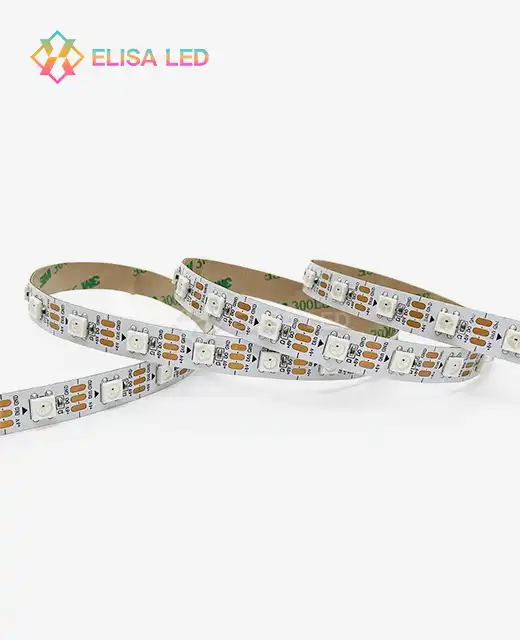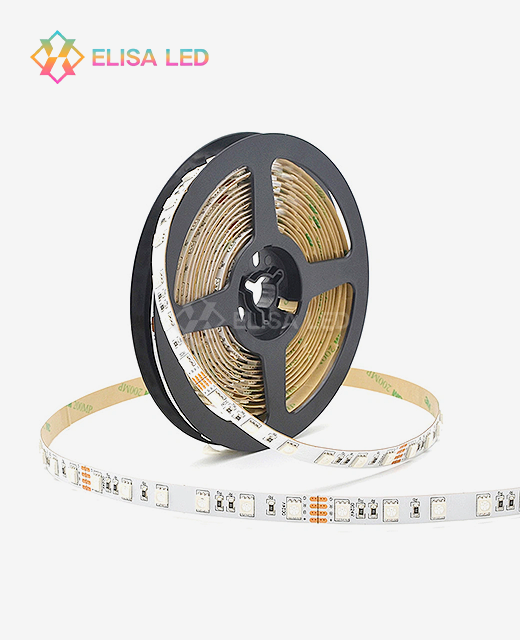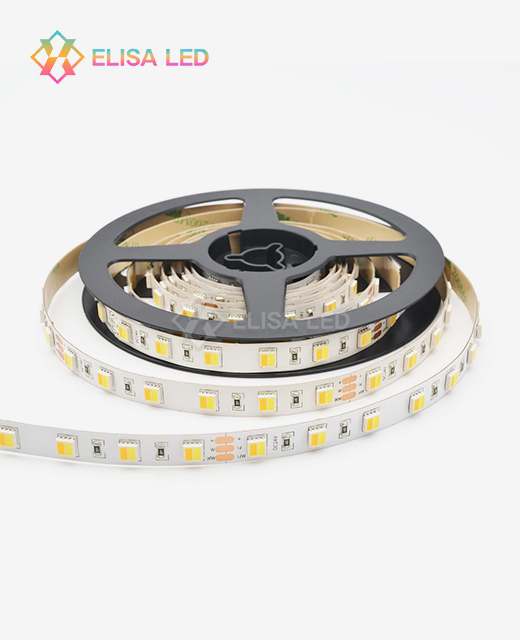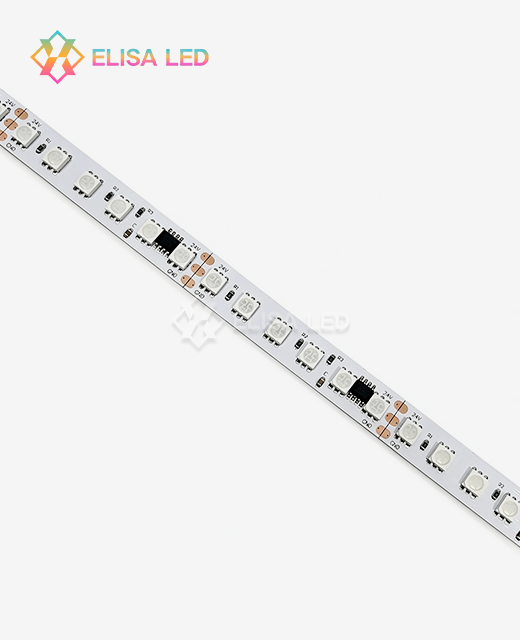
96LEDs/m 24V WS2811
Brightness:700lm/m
MOQ: 5M
Lead Time: 5-7days
PCB width: 12mm
SPI protocol: WS2811/UCS1903
IP Rating: IP20/IP65/IP67/IP68
MOQ: 5M
Lead Time: 5-7days
PCB width: 12mm
SPI protocol: WS2811/UCS1903
IP Rating: IP20/IP65/IP67/IP68
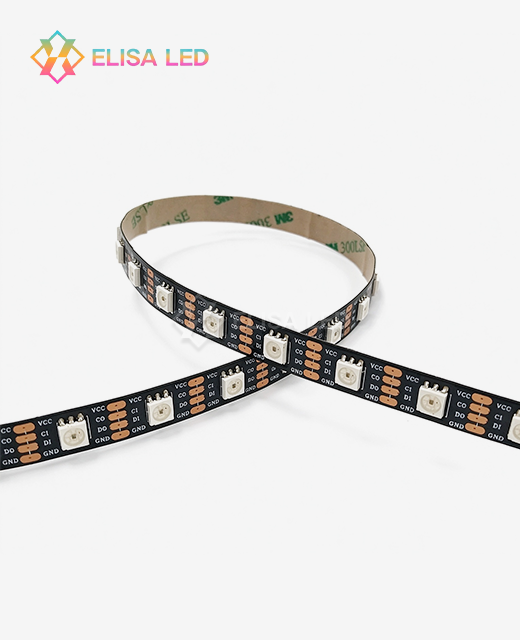
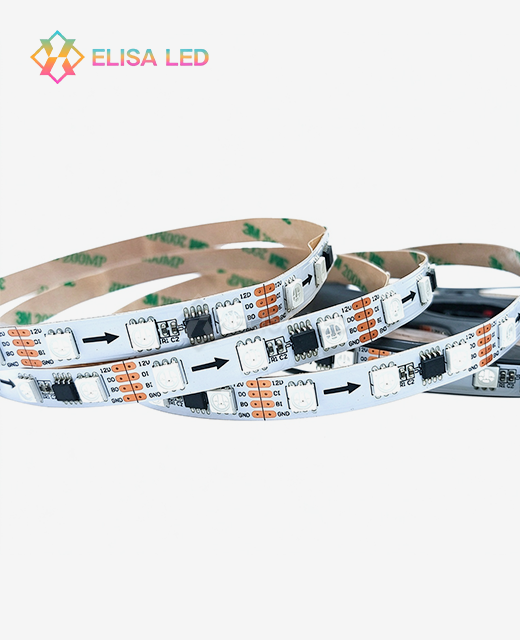
The 96LEDs/m 24V WS2811 is a high-density, individually addressable RGB LED strip built for professional architectural and commercial lighting projects. Running on 24V DC, it supports continuous runs up to 10 meters with minimal voltage drop — a common issue with 12V systems. Each meter carries 96 SMD5050 RGB LEDs and 16 external WS2811 ICs, giving you 16 independently controllable pixels per meter. With 23W/m power consumption and a 12mm PCB width, it fits cleanly into standard aluminum profiles. Available in IP20, IP65, IP67, and IP68 ratings, this strip adapts to both indoor and outdoor installations.

Most addressable strips on the market run at 12V. That works for short runs — but once your installation stretches beyond 3–5 meters, voltage drop becomes a real problem. Brightness fades, colors shift, and the end of the strip looks noticeably different from the start.
The 24V architecture changes that. For the same wattage, a 24V system draws half the current compared to 12V. Less current means less heat, less resistance loss, and more stable color output across the full run length.
With 96 LEDs packed into every meter, you also get a much smoother light output. Compared to 30 or 60 LED strips, the 96LEDs/m density nearly eliminates the visible "dot" effect — especially important when the strip is used inside diffuser profiles or viewed at close range.
| Parameter | Details |
|---|---|
| Part Number | XXA-STRIP-96D5050RGB-WS2811 |
| LED Quantity | 96 LEDs/m |
| LED Type | SMD5050 RGB |
| IC Quantity | 16 ICs/m |
| IC Protocol | WS2811 / UCS1903 (SPI) |
| Operating Voltage | DC 24V |
| Power Consumption | 23W/m |
| Brightness | 700 lm/m |
| PCB Width | 12mm |
| Pixels per Meter | 16 (1 IC controls 6 LEDs) |
| Grayscale | 256 levels per color (8-bit) |
| Refresh Rate | Up to 400Hz |
| IP Rating | IP20 / IP65 / IP67 / IP68 |
| MOQ | 5 meters |
| Lead Time | 5–7 days |
| Warranty | 2years |

The PCB is built with a 2oz or 3oz rolled-annealed copper FPCB. This design improves thermal dissipation and keeps current flowing evenly across the full strip length — reducing hot spots that cause early LED failure.
The WS2811 protocol uses a standard 3-wire signal line (V+, Data, GND), compatible with popular control platforms including Arduino (FastLED and Adafruit NeoPixel libraries), DMX controllers, and most commercial addressable LED controllers.
With 256 grayscale levels per color channel and a refresh rate up to 400Hz, animations and color transitions appear fluid and precise — no stepping or flickering in professional installations.
Architectural linear lighting: The 96 LED/m density fits well into shallow aluminum diffuser profiles. The tight LED spacing removes visible dots and produces an even, diffused glow across coves, edges, and linear ceiling details.
Large commercial facades: For perimeter lighting on buildings, shopping malls, or large retail spaces, the 24V system allows longer runs between power injection points. This matters when mounting locations are fixed and adding extra power supply points isn't practical.
Stage and event production: In stage design, the strip is frequently installed in IP67-rated silicone extrusions. The 24V system provides better resistance against signal interference and voltage fluctuations caused by heavy stage equipment sharing the same power grid.

ElisaLED applies five key quality checks before shipment for 96LEDs/m 24V WS2811:
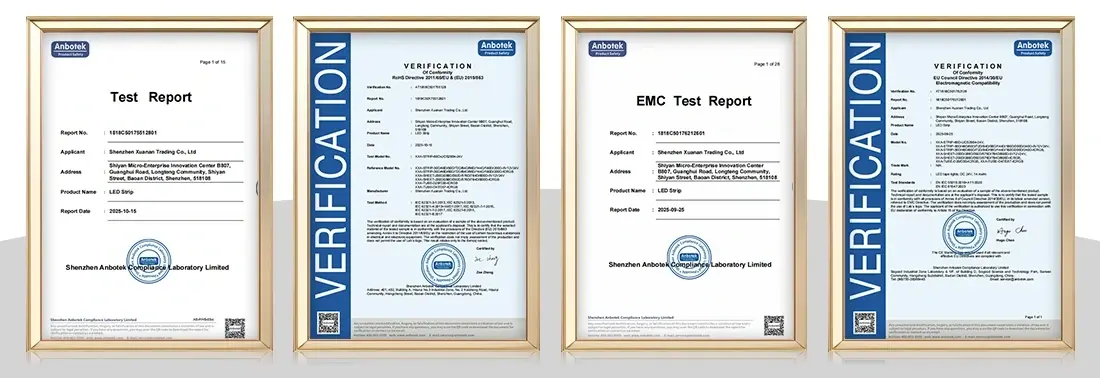
ElisaLED supports full OEM/ODM customization, including PCB design, LED chip selection, controller IC selection, housing, wiring, and packaging. Custom products are produced within 7–10 days, with a standard MOQ of 5 meters for this product.
And if you want a certain IP rating, reel length, connection type or control protocol our team can work with you from specification to final shipping. ElisaLED supplies clients in more than 50 countries and answers to all enquiries within 24 hours.
Q: What's the difference between WS2811, WS2814 and WS2818 digital LED strips?
A: WS2811 strips (including the product) are addressable RGB strips, employing an external IC for each LED group. The WS2814 RGBW has a dedicated white channel for genuine white output as well as colour effects. WS2818 employs twin data lines to back up signals so the strip may continue to operate if one LED fails – helpful in large-scale or crucial applications.
Q: What is the difference between 12V and 24V WS2811 strips?
A:The 24V version supports longer runs with less voltage drop. The product reduces current by half for the same wattage, producing less heat and maintaining more consistent brightness across extended installations compared to 12V alternatives.
Q: Can I control each individual LED on this strip?
A:No. In the 24V configuration, one WS2811 IC controls a group of 6 LEDs. You get 16 independently controllable pixels per meter — not 96 individual LED control points.
Q: What is the maximum run length before power injection is needed?
A:Up to 10 meters when powered from both ends, or 5 meters from a single end, for consistent brightness and color across the full run.
Q: Is this strip compatible with Arduino?
A:Yes. The WS2811 protocol is supported by FastLED and Adafruit NeoPixel libraries, making it compatible with Arduino and many other popular control platforms.
Q: What should I consider before selecting a digital LED strip?
A:Review IC type and protocol, voltage and power supply requirements, LED density, color or white lighting needs, signal reliability, control system compatibility, IP rating, and total run length. These factors together determine which strip suits your project best.
Have a project in mind for 96LEDs/m 24V WS2811? Contact ElisaLED at inquiry@elisaled.com — expect a reply within 24 hours.